NOBUYOSHI ARAKI. Secret Pages

Opening saturday, july 18 at 7.00 p.m
18 july- 17 october
Curated by Sonia Borsato

There are images that reveal, and images that preserve. Nobuyoshi Araki's photographs belong to both categories: they disclose and conceal, transforming every fragment of reality into a page of life.
It is precisely within this tension between confession and mystery that Secret Pages unfolds, the exhibition dedicated to one of the most influential and controversial figures in contemporary photography, on view from 18 July to 17 October 2026 at the Pinacoteca Carlo Contini in Oristano.
Curated by Sonia Borsato and presented as part of the twenty-eighth edition of the Dromos Festival, whose 2026 theme is Secrets, the exhibition features 122 photographic works—101 Polaroids and 21 photographs in various formats—all drawn from the Molinas Balata Collection. This refined selection explores some of the most emblematic themes of Araki's artistic vision: desire and memory, intimacy and loss, sensuality and melancholy, life and death. Together, these 122 images compose a fragmented yet coherent narrative, like the pages of a private diary left slightly open to the viewer's gaze.
In dialogue with the festival's theme, Secrets, which investigates the hidden as a source of curiosity, creativity and belonging, the photographs in Secret Pages do not provide answers; instead, they open spaces for reflection. Fragments of the real world, isolated through Araki's lens, preserve what usually escapes our attention. Here, the secret is not something to be unveiled, but rather a dimension to be approached with sensitivity, aware that every revelation inevitably gives rise to new questions and new mysteries.
Born in Tokyo in 1940, Nobuyoshi Araki has developed, over more than half a century, a unique visual language that brings together autobiographical documentation, eroticism, urban observation and visual experimentation. For Araki, photography has never been merely a tool of representation, but a way of existing—a means of inhabiting time and holding onto it before it disappears. His relentless and compulsive practice of photographing, driven by the desire to preserve each passing moment and the life unfolding around him, transforms every image into a testimony of the present and an act of resistance against oblivion.
Pietro Molinas Balata remarks: "With his extraordinary genius, Araki succeeds in portraying the many facets of women, flora and everyday objects, revealing their hidden and secret dimensions—sometimes passionate, sometimes profoundly dreamlike—imagined visions that elevate the human spirit."
Within this artistic journey, the Polaroid occupies a privileged place. When Araki discovered its expressive possibilities, the instant photograph became far more than a technical medium. It evolved into an extension of memory and the body, an immediate form of visual writing, and the ideal tool for an artist who has always sought to capture the uninterrupted flow of life without filters.
The Exhibition
"Secret Pages by Nobuyoshi Araki represents an important cultural opportunity for Oristano, offering visitors an artistic experience of international significance," says Simone Pietro Prevete, Councillor for Culture of the Municipality of Oristano. "The exhibition confirms the city's growing role as a centre open to cultural dialogue and contemporary creativity, enhancing the local area through high-profile artistic collaborations. In doing so, the Municipal Administration reaffirms its commitment to promoting culture as a driver of growth, social cohesion and development, while strengthening Oristano's identity within Sardinia's cultural landscape."
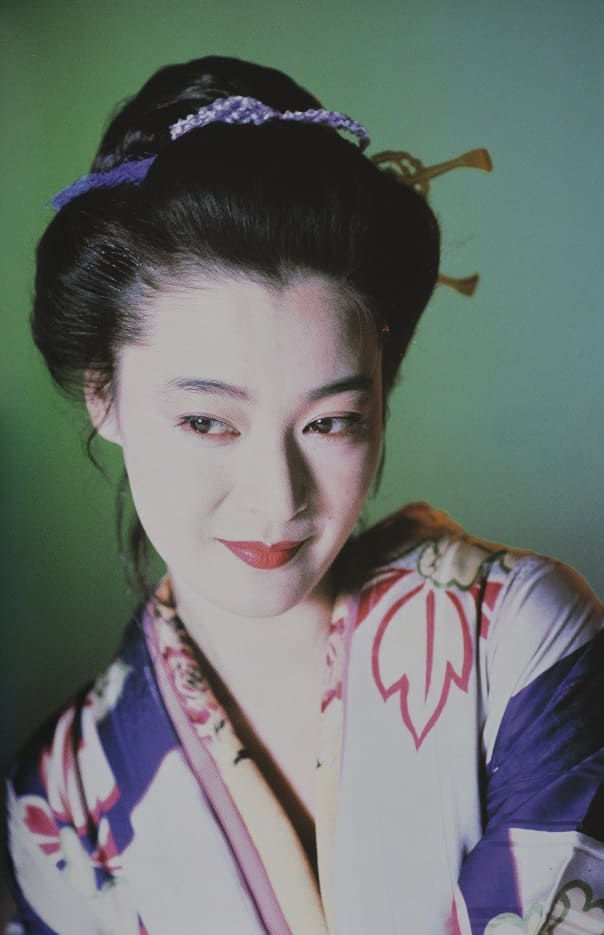
The 122 photographs presented in Secret Pages convey the complexity of a gaze that constantly moves between domestic intimacy and provocation, delicacy and transgression. Flowers, bodies, everyday details, female figures and suspended visions coexist within a poetic universe where reality becomes charged with symbolism, and each image seems to preserve a story that is never fully revealed—a visual narrative shaped by allusions, silences and unexpected revelations.
Nobuyoshi Araki's photography stems from a profoundly diaristic conception of art, in which every image becomes a trace of existence. From the moments shared with his wife Yōko to his celebrated female portraits, from floral compositions to urban landscapes, Araki has transformed his own life into artistic material, making the personal universal and turning individual experience into a collective reflection on the fragility of time and the impermanence of life itself—a concept deeply rooted in Japanese culture.
One of the most radical and widely discussed aspects of Araki's practice, which established him as a leading figure on the international art scene, is his exploration of eroticism and sexuality, often expressed through images inspired by kinbaku, the traditional Japanese art of rope bondage. Literally meaning "tight binding," kinbaku is both an artistic discipline and an erotic practice that transcends the purely physical act, recognised for its ability to create profound intimacy and emotional connection. In these works, women bound with ropes are portrayed within environments deeply imbued with Japanese culture—tatami rooms, minimalist interiors and suspended atmospheres that evoke an almost theatrical dimension.
The power of these photographs lies in their intense dramatic tension, created by the contrast between the emotional charge of the scene and the apparent impassivity of the models, whose enigmatic, monumental presence heightens the sense of narrative suspension. These images seem to mirror Araki's own gaze: one of acute attentiveness combined with contemplative distance, as though observing the flow of events without ever attempting to intervene.
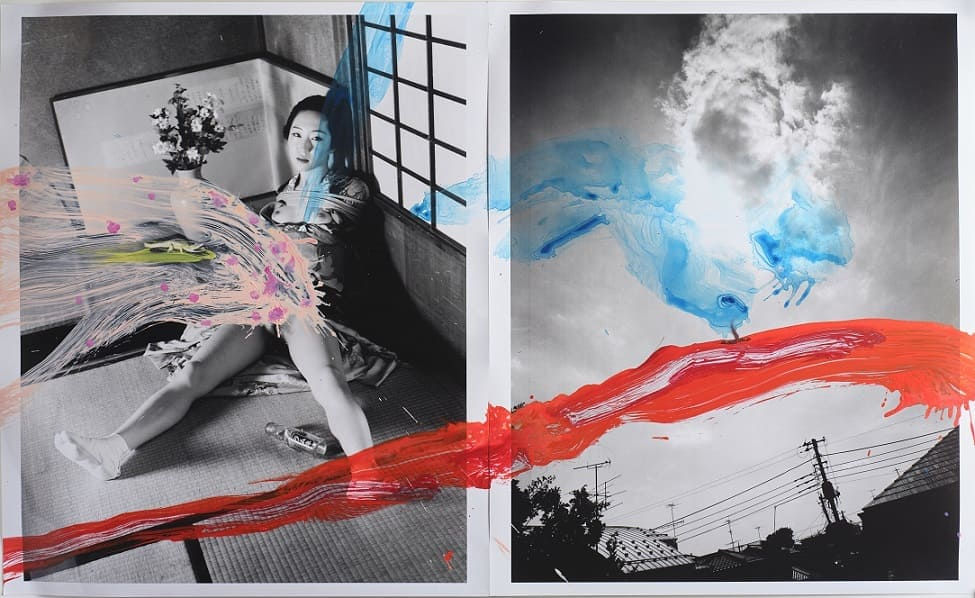
What may appear to be an exhibition of eroticism is, in fact, a meditation on time, transience and, above all, the elusive nature of existence," explains curator Sonia Borsato. "His images seem to suggest that everything is ephemeral—beauty and love inevitably fade with time—and yet, for that very reason, they are worth looking at and remembering. Through his photographs, Araki attempts to embrace the impermanence of desire while, at the same time, probing the mystery of our existence."
Behind the provocative power that has often fuelled debate around his work lies a constant reflection on human vulnerability. Eroticism and death, desire and absence, beauty and dissolution coexist in his photographs as inseparable aspects of the same experience. It is this awareness that gives his work such emotional force, allowing him to find poetry where everything appears destined to disappear.
Araki's enduring legacy lies precisely in his ability to transform fleeting moments into memory and photography into a threshold where art and life continuously merge. Through his use of Polaroids, colour, manual interventions and narrative sequences, the Japanese photographer has profoundly redefined the very act of looking at images.
Nobuyoshi Araki | Biography
Born in Tokyo in 1940, Nobuyoshi Araki is regarded as one of the most influential figures in contemporary international photography. The author of more than 500 photobooks, he has developed a deeply autobiographical artistic practice centred on what he himself has defined as I-Photography: an approach that transforms everyday life, personal relationships, desire, loss and the passage of time into visual narrative. His works are held in the permanent collections of some of the world's leading museums, including Tate Modern in London, the San Francisco Museum of Modern Art, the Stedelijk Museum in Amsterdam and the Museum of Contemporary Art Chicago. Despite this international recognition, his work has retained a profoundly intimate and human dimension, bridging personal experience and collective memory.
Dromos Festival 2026
The 28th edition of the Dromos Festival is organised by the Dromos Cultural Association with the support of the Italian Ministry of Culture, the Autonomous Region of Sardinia (Department of Public Education, Cultural Heritage, Information, Entertainment and Sport, and Department of Tourism, Crafts and Commerce), the Fondazione di Sardegna, the Fondazione Mont'e Prama, and the Fondazione Parte Montis. Additional support is provided by the Municipalities of Oristano, Cabras, Tadasuni, Neoneli, Mogoro, Masullas, Pompu, Nureci, Fordongianus and Milis, together with Cantina Contini, Cantina Silvio Carta and Sa Marigosa. The festival also benefits from the collaboration of the Archdiocese of Oristano, Pinacoteca Carlo Contini, Fondazione Oristano, Centro Servizi Culturali U.N.L.A. di Oristano, Museo Diocesano Arborense, Music Academy of Isili, Rai Radio 3, ViaggieMiraggi, Mariposas de Sardinia and Radio Popolare.
Informations:
Nobuyoshi Araki: Secret Pages
18 July – 17 October 2026
Pinacoteca Carlo Contini, Oristano


Comments