A PICK GALLERY Between Painting, New Artistic Research and the International Art Market
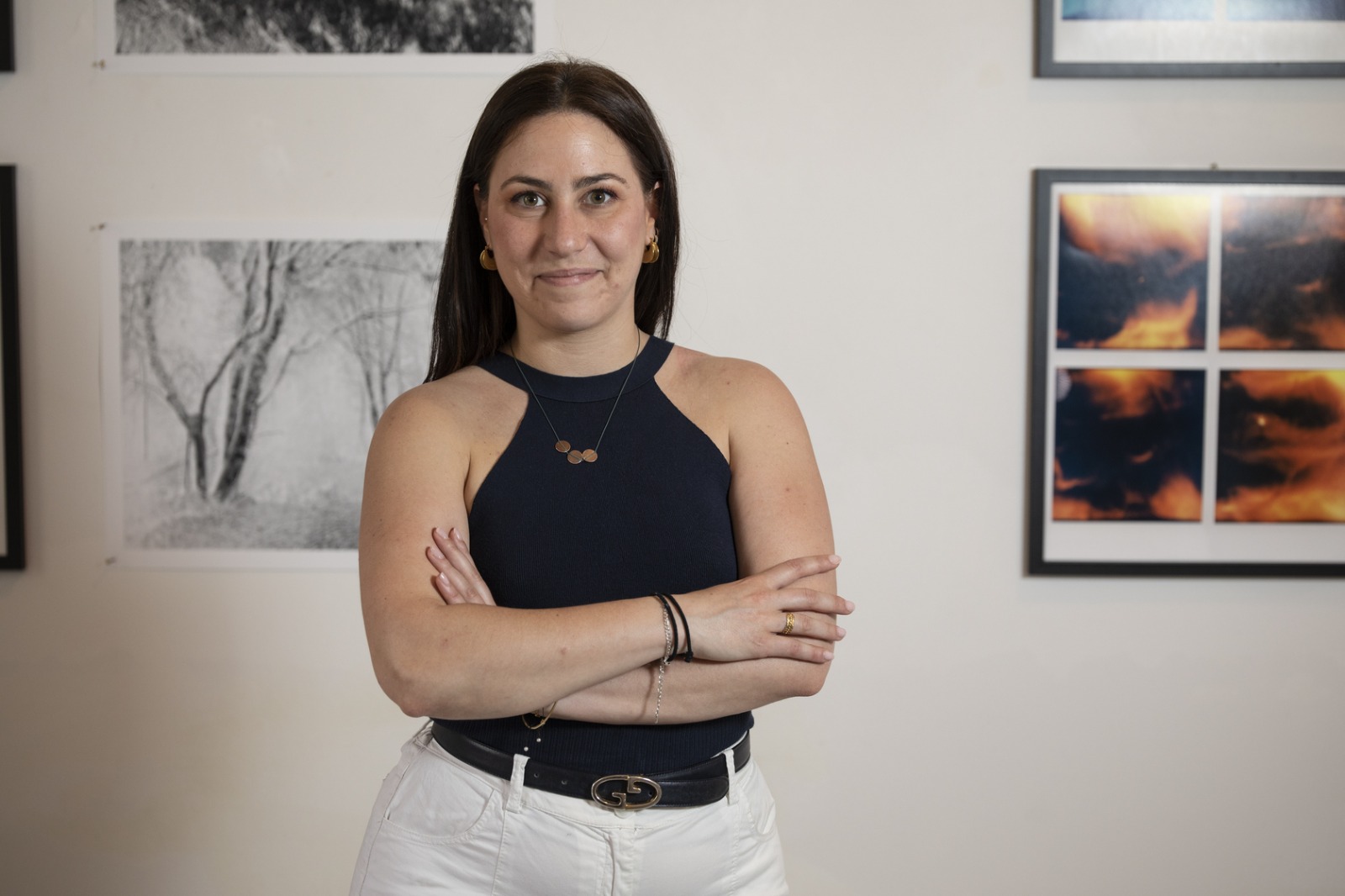
Founded in Turin in 2019 by Valentina Bonomonte and Emanuela Romano, A PICK GALLERY emerged from a shared journey and a desire to create a space open to international artistic research, experimentation, and dialogue between different artistic languages and generations. The gallery places artist selection, the quality of relationships, and a vision that extends beyond the exhibition and commercial dimensions at the heart of its mission.

The history of A PICK GALLERY has its roots in Opere Scelte, founded in 2012 by the two gallery owners. After almost seven years of activity, the desire to broaden the scope of their artistic research and develop new collaborations led to the creation of a renewed project, housed in a space of approximately 300 square metres in the San Salvario neighbourhood of Turin. The move coincided with an evolution in the gallery's identity, increasingly oriented towards dialogue with the international art scene.
The name itself embodies a fundamental principle of the project. To pick, meaning to choose and select, recalls the experience of Opere Scelte and emphasises the value of choosing as an act of responsibility, one that translates into a concrete and lasting commitment to artists. An approach in which initial intuition is accompanied by an in-depth critical understanding of artistic practices, the building of relationships based on trust, and the desire to contribute to the long-term development of artists' careers.
While maintaining a strong connection with painting, a medium that has been central to the founders' work from the very beginning, A PICK GALLERY has gradually expanded its programme to embrace different practices and media. Participation in international art fairs, collaborations with other galleries, and dialogue with institutions and cultural organisations have become essential tools for promoting the circulation of artworks and creating new opportunities for encounters between artists, collectors and the public.
This perspective also informs the gallery's relationship with Premio Combat, of which A PICK GALLERY has been a longstanding partner. This collaboration has enabled the gallery owners to discover and support artists from different backgrounds and with diverse artistic approaches, in several cases transforming an initial award into subsequent exhibition projects and ongoing collaborations.
We spoke with Valentina Bonomonte and Emanuela Romano to explore the vision behind A PICK GALLERY, the role of painting in the contemporary art landscape, the responsibilities of galleries in supporting artists' careers, and the value of relationships within the art world. A conversation that traces the gallery's development, its connection with Premio Combat, and the projects that will shape its coming months.
Valentina and Emanuela, how did A PICK GALLERY come about, and what vision has guided the development of the project?
A PICK GALLERY was founded in Turin in 2019 as a shared project, driven by the desire to create a space dedicated to the research and promotion of contemporary art, with an outlook open to the international art scene. From the very beginning, we envisioned the gallery not only as an exhibition space, but also as a place for encounters and exchange between artists, curators, collectors and cultural organisations. Our focus has been primarily on emerging artists and the opportunity to discover artistic practices and languages capable of offering new perspectives on contemporary art, while also promoting and rediscovering artists who are already established within the art world. Over time, we have sought to develop a programme that alternates individual artistic practices with collective projects, bringing together different sensibilities, generations and backgrounds. We want to build a recognisable identity without losing our curiosity, our commitment to experimentation, or our willingness to continually challenge ourselves, particularly by bringing to Turin what is happening in the rest of the world.

The gallery’s name evokes the act of choosing. How do you approach the selection of artists in practice, and how important are initial intuition and in-depth research in your decision-making process?
Choosing is indeed the starting point of our work. To pick does not simply mean selecting, but taking responsibility for a choice and committing to supporting an artistic practice over time. Initial intuition is essential: it often comes from a gut feeling when encountering an artwork, an image, an artistic language or a sensibility that we find particularly compelling. But intuition alone is not enough. We seek to explore the artist’s journey in depth, understand their motivations, the coherence of their practice and, above all, their potential for development. We are not necessarily looking for an already fully defined artistic language; rather, we are interested in practices that convey a sense of urgency, an ability to evolve and a capacity to engage in dialogue with the present. It is important to share an artistic understanding, but also to have the possibility of building a personal and professional relationship based on mutual trust.
Painting has played an important role in your work from the very beginning. In your opinion, what position does it occupy in the Italian contemporary art scene today, and how is collectors’ interest in this medium evolving?
Painting has always played an important role for us, in all its forms. It is a medium we particularly love because it offers artists extraordinary expressive freedom and a range of possibilities that is difficult to find in other media. It can become a means of telling personal and intimate stories, of describing and investigating reality, but it can also free itself from any narrative intention and become pure material, gesture or conceptual exploration.
We love the fact that painting has no predetermined boundaries and can continually reinvent itself, interacting with other artistic languages and experimenting with different techniques, materials and supports. In this respect, we are also a little romantic: we still love the charm and even the smell of oil paints on canvas, but we equally appreciate the freshness of acrylics, the lightness of watercolours, the immediacy of spray paint and the possibilities offered by unconventional surfaces and supports.
We believe that it is precisely this ability to be, at the same time, a medium deeply rooted in tradition and a field of continuous experimentation that preserves its central role in the contemporary art landscape.
Collectors’ interest also seems to be evolving. Alongside continued strong demand for painting, we are seeing growing curiosity towards artists who explore its possibilities in personal and unconventional ways. We feel that more discerning collectors today are increasingly less influenced by categories or passing trends and more attentive to the quality, authenticity and depth of artistic research.

The relationship between a gallery and an artist goes beyond organising exhibitions or selling artworks. In your opinion, what responsibilities does a gallery have in building and consolidating an artist’s career? And what opportunities can art fairs and collaborations with other organisations within the art world offer along the way?
We believe that one of a gallery’s main responsibilities is to build a lasting relationship with the artist, going far beyond individual exhibitions or the sale of artworks. For us, helping an artist grow, supporting the development of their artistic practice and contributing to the long-term development of their career is far more important and rewarding than achieving immediate commercial results.
This requires a significant investment of time, energy, resources and strategic planning. It means gaining an in-depth understanding of the artist’s work, sharing their goals, identifying the most appropriate strategies and working as a team, ensuring that everyone involved is aligned and moving in the same direction. An artist’s growth is never the result of an isolated action, but rather a journey built together through carefully considered decisions and a long-term vision.
For this relationship to work, however, mutual trust is essential. Artists must be able to rely on their gallery, trust its decisions and feel supported even when strategies require patience or involve choices that do not produce immediate results. At the same time, we believe that personal compatibility is equally important: human connection, shared values and ways of working are elements that profoundly influence the quality and longevity of a collaboration.
There is also an aspect that perhaps receives too little attention: the artist’s responsibility towards the gallery. While the gallery makes a concrete investment in the artist’s growth, promotion, visibility and the creation of opportunities, it is equally reasonable to expect professionalism, transparency, respect for agreements and genuine involvement in the shared project. A strong professional relationship must be based on mutual commitment: it cannot be a relationship in which only one party invests and takes responsibility.
Art fairs play an important role in this process, as they allow artists’ work to reach beyond the local context, connect with new collectors, engage with international audiences and strengthen their presence within the art world. Equally important, however, are collaborations with other galleries, institutions and cultural organisations, which can broaden opportunities for exchange and generate projects and possibilities that would be difficult to achieve within a single context.

A PICK GALLERY has been a partner gallery of Premio Combat for several years. What opportunities have emerged from this collaboration, and how have your relationships with the selected artists developed?
Our collaboration with Premio Combat is particularly meaningful because it allows us to engage with a broad and diverse artistic scene, discovering artistic practices that we often have not yet had the opportunity to encounter directly.
What interests us most is the possibility of transforming the selection into a concrete opportunity, maintaining an ongoing relationship with artists through exhibition projects and collaborations that extend beyond the award itself. We therefore do not see the recognition as an endpoint, but rather as the beginning of a potential shared journey.
Over the years, we have selected artists working across different artistic languages and coming from diverse backgrounds, including Leila Erdman Tabukashvili, Jilian Wu, Andrea Lucchesi, Sergio Gagliardo, Tunahan Havrandere and José Victor De Castro. With Leila Erdman Tabukashvili, we have been able to continue our dialogue by presenting her works at several art fairs, including Santander, MIA and Arte Fiera Bologna. Our relationship with Sergio Gagliardo will also develop further: in February 2027, we will present a solo exhibition of his work at Arte Fiera Bologna, following his selection for the 2026 edition of Premio Combat.
With José Victor De Castro, meanwhile, our collaboration began last September with the presentation of his solo exhibition Domingo.
It is precisely this continuity that we consider important: the opportunity to explore an artist’s practice in greater depth, work together on the development of new projects and build a relationship that does not end with the award itself. In this sense, Premio Combat represents a valuable opportunity for us to discover new artistic practices and establish meaningful connections within the contemporary art scene.
Looking ahead to the coming months, what projects will you be working on, and what upcoming developments can you share with us?
The coming months will be primarily dedicated to developing new collaborations and strengthening our relationships with artists with whom we have already established long-term connections. We want to continue working on projects that bring different artistic practices into dialogue, including through collaborations with other galleries and cultural organisations.
In the immediate future, we will open a solo exhibition by American artist Lori Lorusso in January, while at the end of November we will participate in the Rome-based art fair Arte in Nuvola. We are also preparing for Arte Fiera in Bologna and, again in February 2027, we will present a solo exhibition by Jan Muche at the Goethe-Zentrum in Bologna.
At the same time, we are developing several projects aimed at exploring the artistic practices of Maria Elisa Ferraris and Manuel Portioli in greater depth. Our goal is to continue building a programme that alternates artists who have long been part of our journey with new discoveries, while preserving the curiosity and openness that have characterised A PICK GALLERY since its foundation.


Comments