Nivola, Colombo and the space around

Opening thursday 23 July at 6:30 pm
24 july – 25 october 2026
Curated by Chiara Gatti and Anna Pirisi
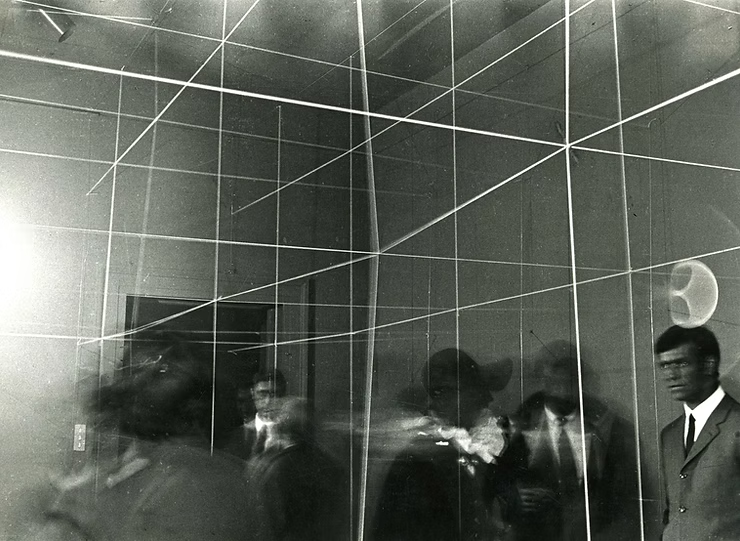
As part of the new exhibition programme Nivola vis-à-vis, conceived to foster a dialogue between Costantino Nivola (1911–1988) and key figures of his time, the Nivola Museum in Orani presents Nivola, Colombo and the Space Around, on view from 24 July to 25 October 2026.
Curated by Chiara Gatti and Anna Pirisi, in collaboration with the Gianni Colombo Archive in Milan, the exhibition forms the core of ROOMS, the first chapter of a three-part narrative conceived by Chiara Gatti, Artistic Director of the Nivola Museum, for the museum's summer–autumn 2026 exhibition programme.
Developed through three interconnected rooms—three environments to cross and experience—the exhibition investigates the notion of space and the experimental language of the environment as a site of relationships between the human body and the inhabitable dimension that surrounds it, with its perspectives, volumes, voids and light.
The exhibition unfolds through Nivola's Dream Room, Gianni Colombo's Elastic Space, and the Room of Memory, conceived as a device for activating collective remembrance. Structured in three movements, like the rhythmic divisions of ancient songs, the exhibition begins with shared memory and expands into a broader reflection on the ways we inhabit and perceive space. Visitors are invited into a sensory experience that engages simultaneously with the artists' research and with the architecture hosting it.
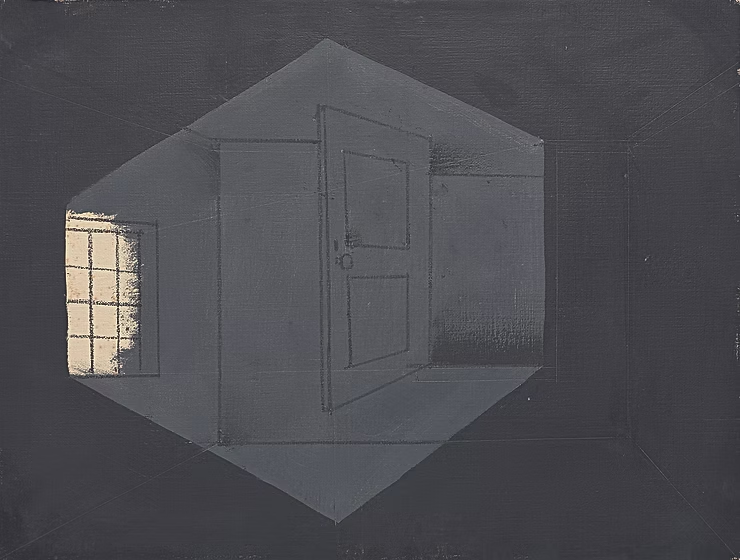
The scholarly premise of the exhibition stems from a meaningful coincidence in dates. Costantino Nivola's first environmental study dates to 1968 with his Model for the Monument to Antonio Gramsci, produced in the very same year that Gianni Colombo presented Elastic Space at the Venice Biennale.
Thinking about space as something to be traversed is central to Nivola's horizontal monuments of the 1960s, such as his project for Piazza Satta. Significant affinities emerge between the two artists in the construction of space and in their use of light as a defining element.
"A light entering through the window," wrote Nivola, "to dissolve the persistent darkness / of my temple and prison of intimacy / and my daydreams."
Within Nivola's aesthetic research, the room becomes the primary unit through which space is measured: not merely an architectural enclosure but a place built around human presence. Inhabited space becomes the essential nucleus of his thought—a volume conceived to welcome, define and relate the individual to the surrounding world. This vision runs throughout his work, where architecture, sculpture and everyday life merge into a profoundly human conception of space, later materialising in his celebrated little theatres, based on modular forms and mathematical and proportional relationships.
Running through these works is also a subtle evocative tension, suggesting an enigmatic and contemplative dimension. These dream boxes invite us to enter an interior space whose perspective absorbs us, casting us as silent actors within a performance without a script, suspended in a time whose passing is revealed only through the changing of light.
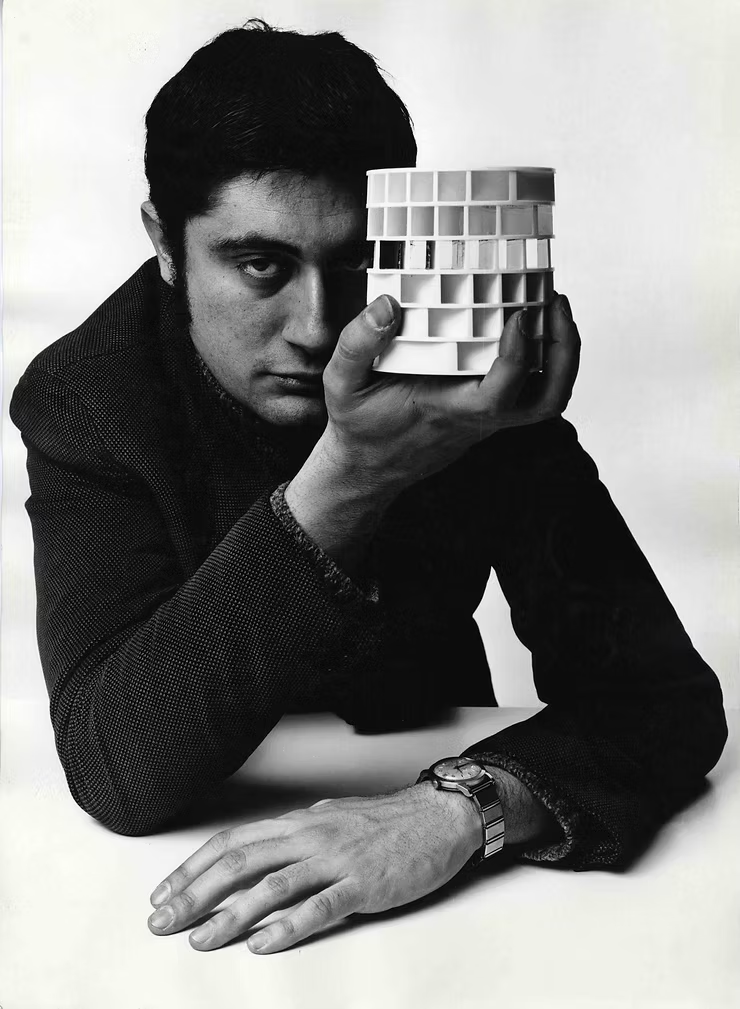
Colombo's own research likewise revolves around the notion of experience.
"I decided to work more on the conditions of balance, sensation and the spectator's relationship with space," he wrote, "rather than creating a visually spectacular and scenographic work... I was seeking the possibility of incorporating these sensations into an artwork to be experienced as an emotional and expressive event."(Gianni Colombo, typescript, 1964–65.) The full-scale reconstruction of Nivola's Dream Room, in dialogue with Colombo's Elastic Space, generates a sequence of perceptual experiences marked by disorientation, shifting coordinates and illusionistic escapes.
The third room, conceived in relation to the previous two, is dedicated to collective memory. Designed as an act of active citizenship, it transforms space from a neutral container into a place for reflection and a device for gathering memories through different languages—voices, gazes, writing, images and gestures. This minimal yet essential action contributes to the creation of a living archive that will become part of the museum's permanent holdings. The Lavatoio (Public Washhouse) thus becomes a place of encounter and exchange, where memory, art and community intertwine in a new shared experience.
Informations:
Nivola, Colombo and the Space Around
24 july 2026– 25 october 2026
Opening thursday 23 July 2026 at 6:30 pm
Via Gonare 2, 08026 Orani (NU), Italy


Comments